

Our source farm
From the fields of Shizuoka
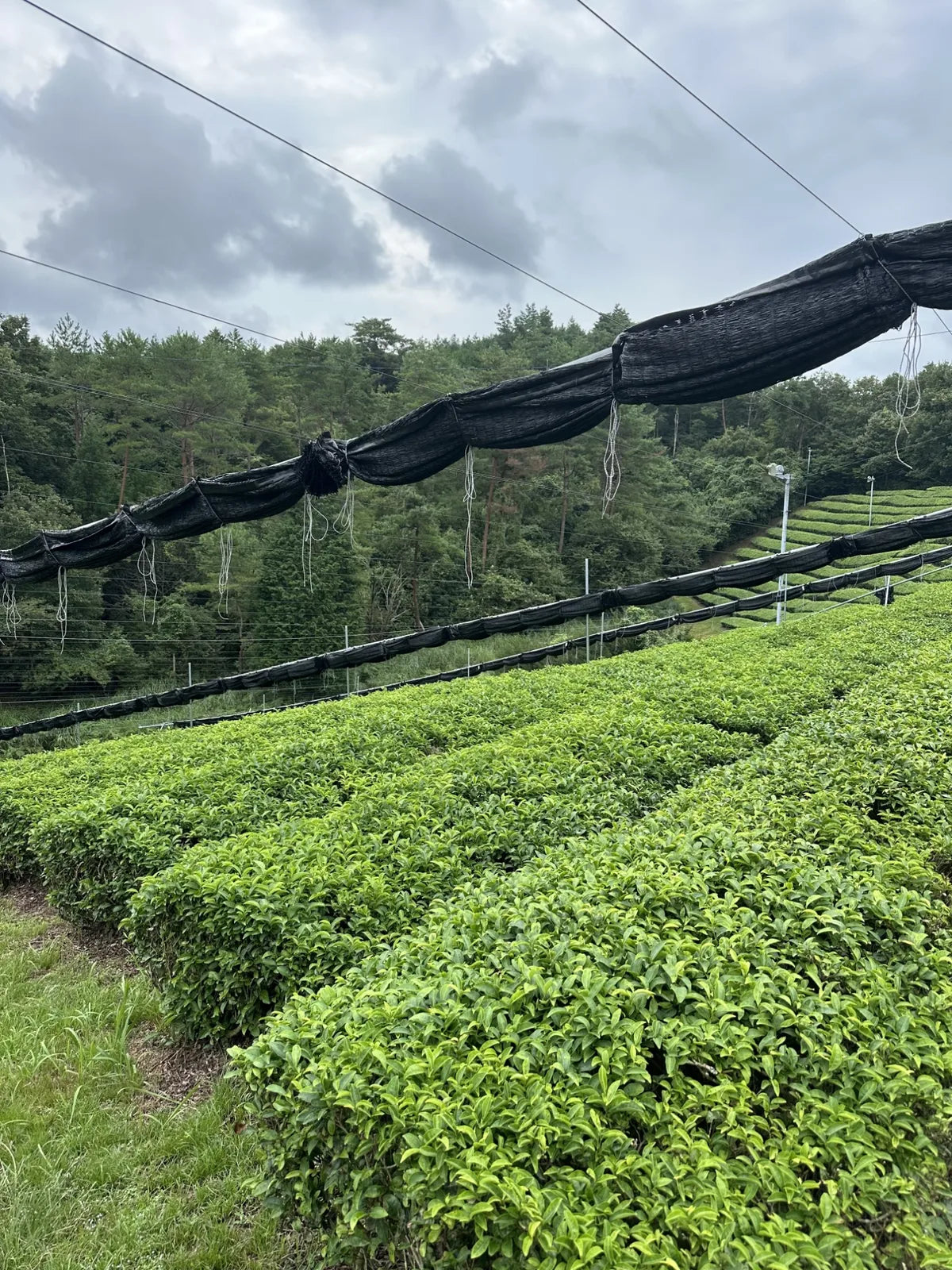
Our matcha grows in Shizuoka, Japan, between Tokyo and Kyoto with Mount Fuji to the north. The soil is rich in minerals and the water comes clean off the mountains.

The fields
Grown in the shade
Shizuoka has more tea fields than anywhere else in Japan. The tea grows in long, low rows over the hills.
A few weeks before picking, the rows are covered with shade cloth. In the shade the leaves grow slowly, stay soft and sweet, and turn a deep green. That is the leaf matcha is made from.
Who makes it
Two producers, both in Shizuoka
Ceremonial Matcha
Our Ceremonial Matcha comes from a long-established producer who makes matcha in small batches, ground on stone.
The dried leaves, called tencha, are kept cold and ground a little at a time, so the matcha stays fresh and bright green.

Premium Matcha
Our Premium Matcha comes from a family-run farm that works closely with the growers around it to choose good leaves.
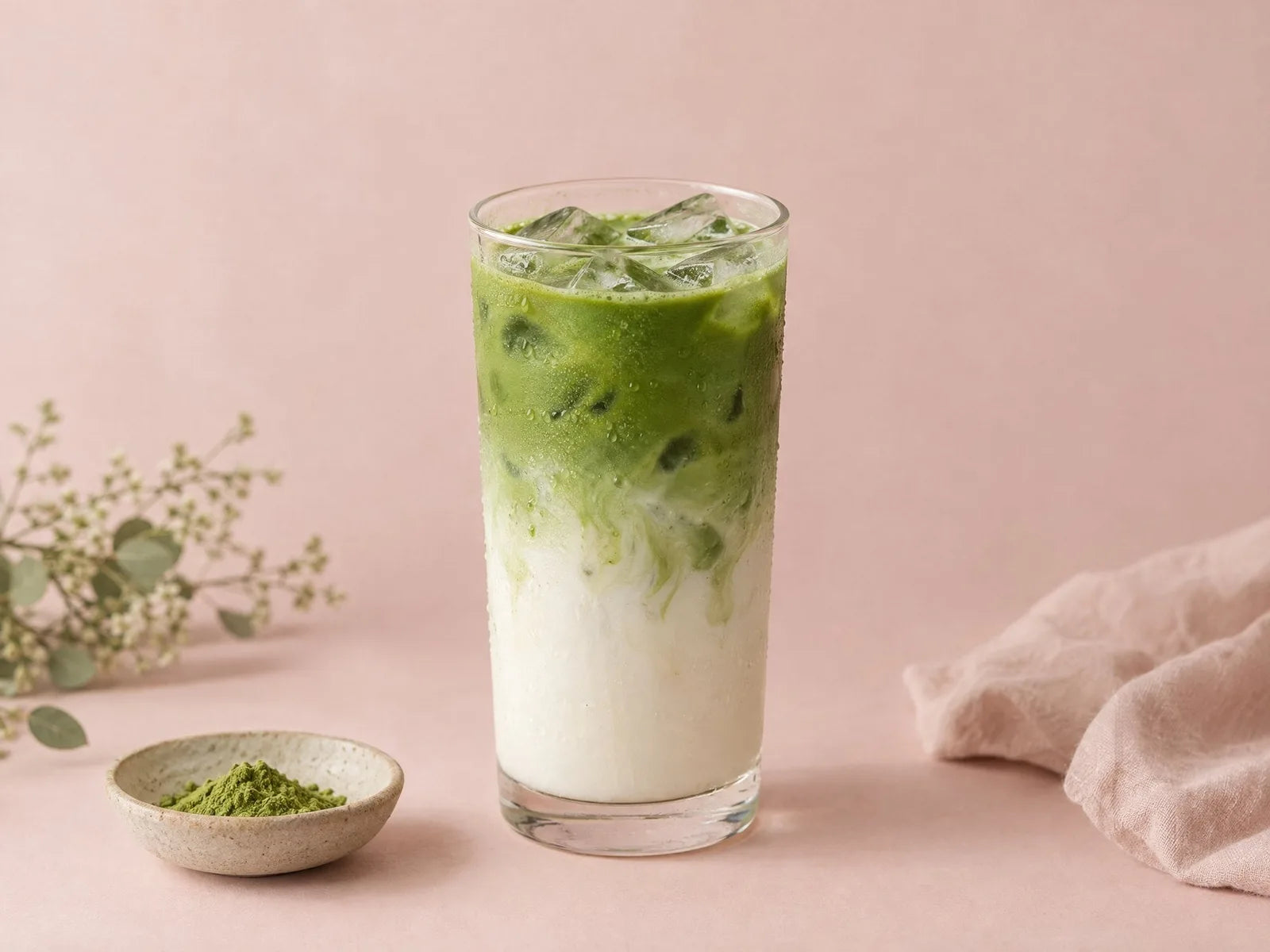
It is the matcha for every day, and for lattes.
From leaf to powder
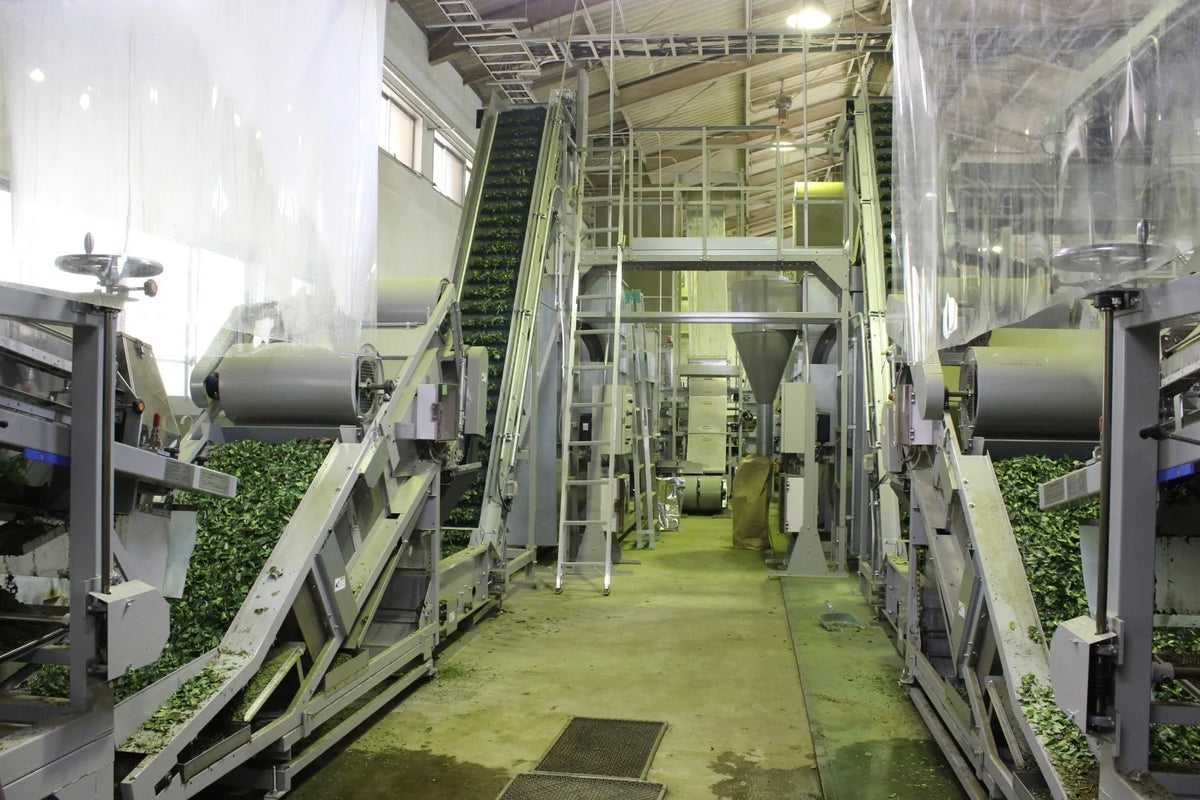
The new shoots
Matcha is made from the season's new, soft shoots, picked at the right moment. Picked late, the leaves harden and lose their sweetness.
From leaf to powder
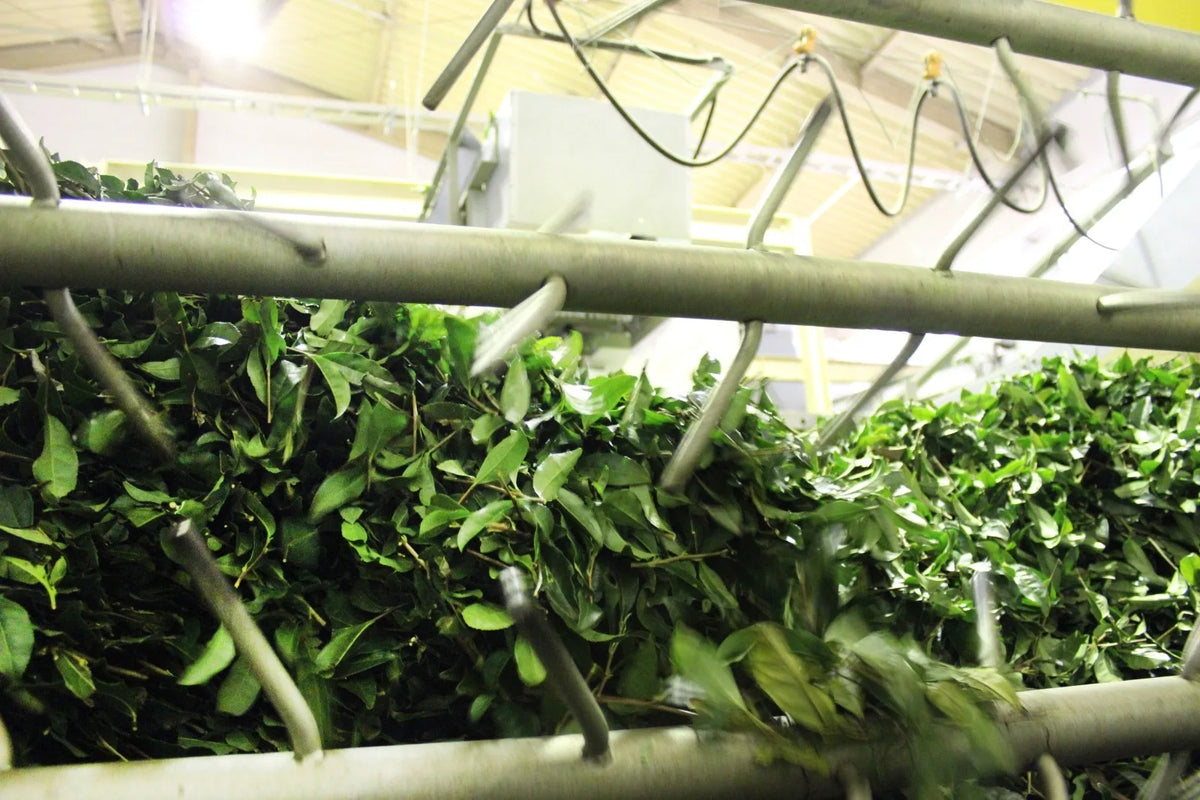
Steamed to keep the green
The fresh leaves are steamed for 10 to 15 seconds, so they stay green.
From leaf to powder
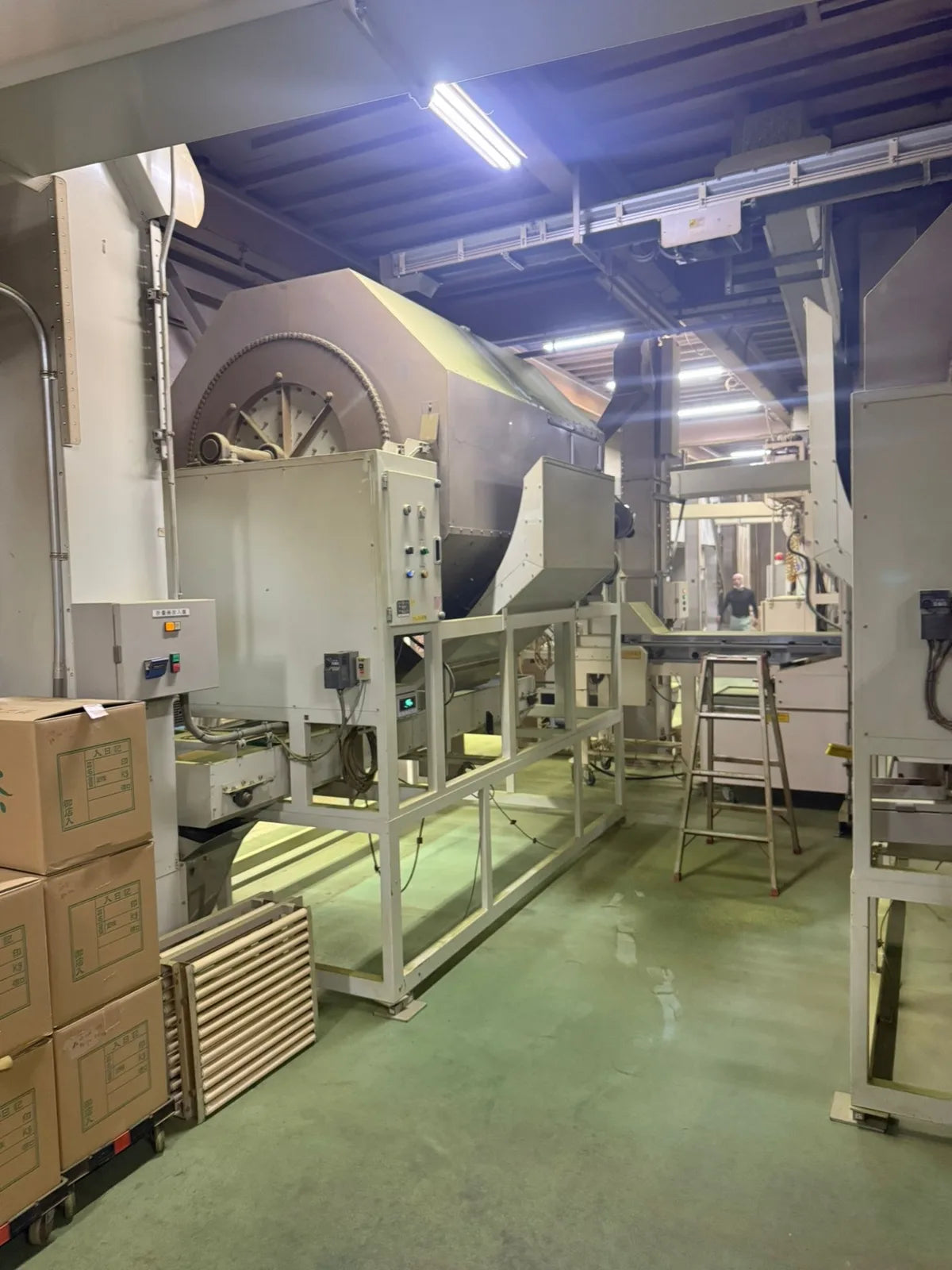
Dried flat
Then they are dried flat, without rolling, in a tall tencha oven.
From leaf to powder
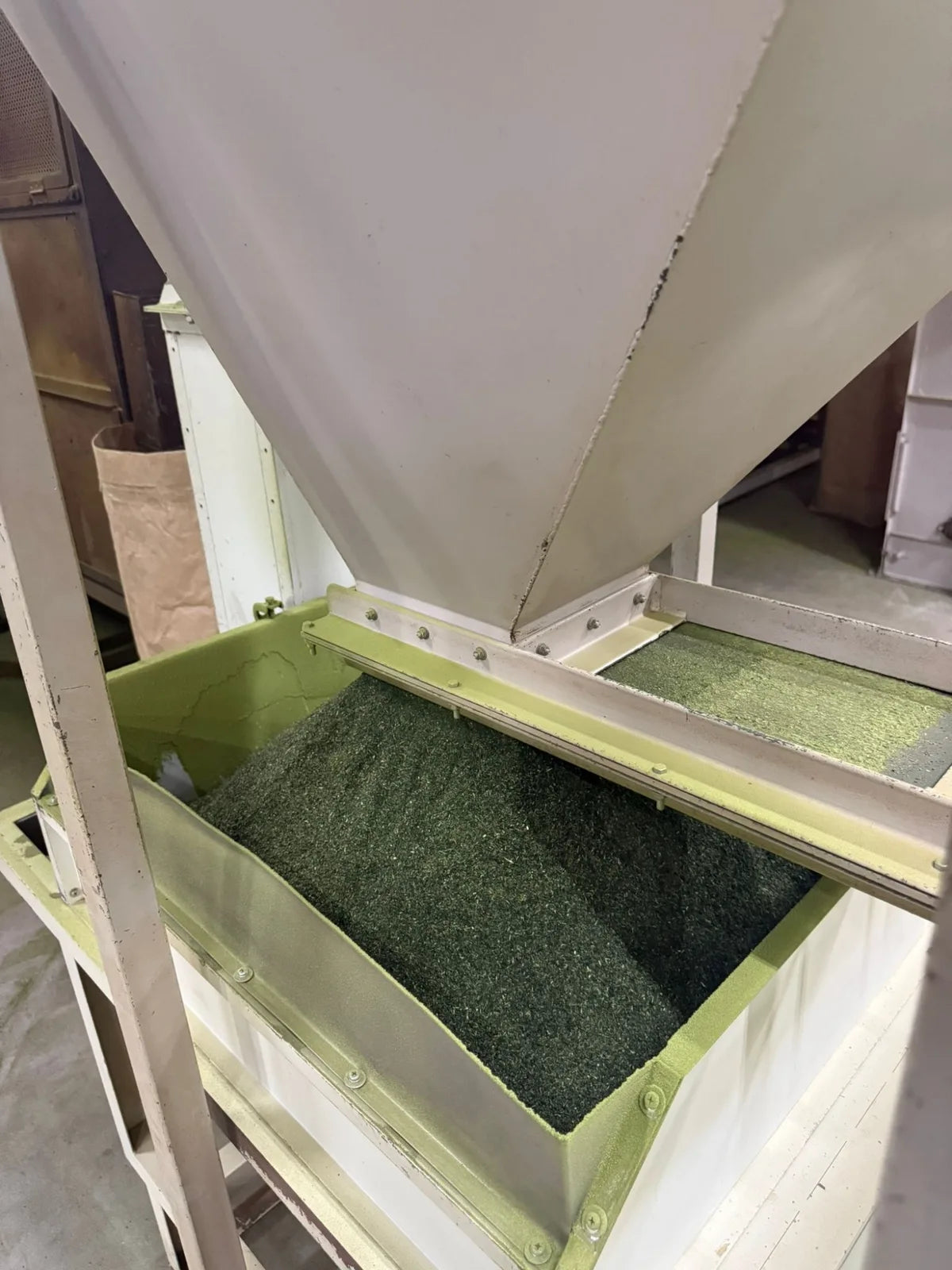
Tencha
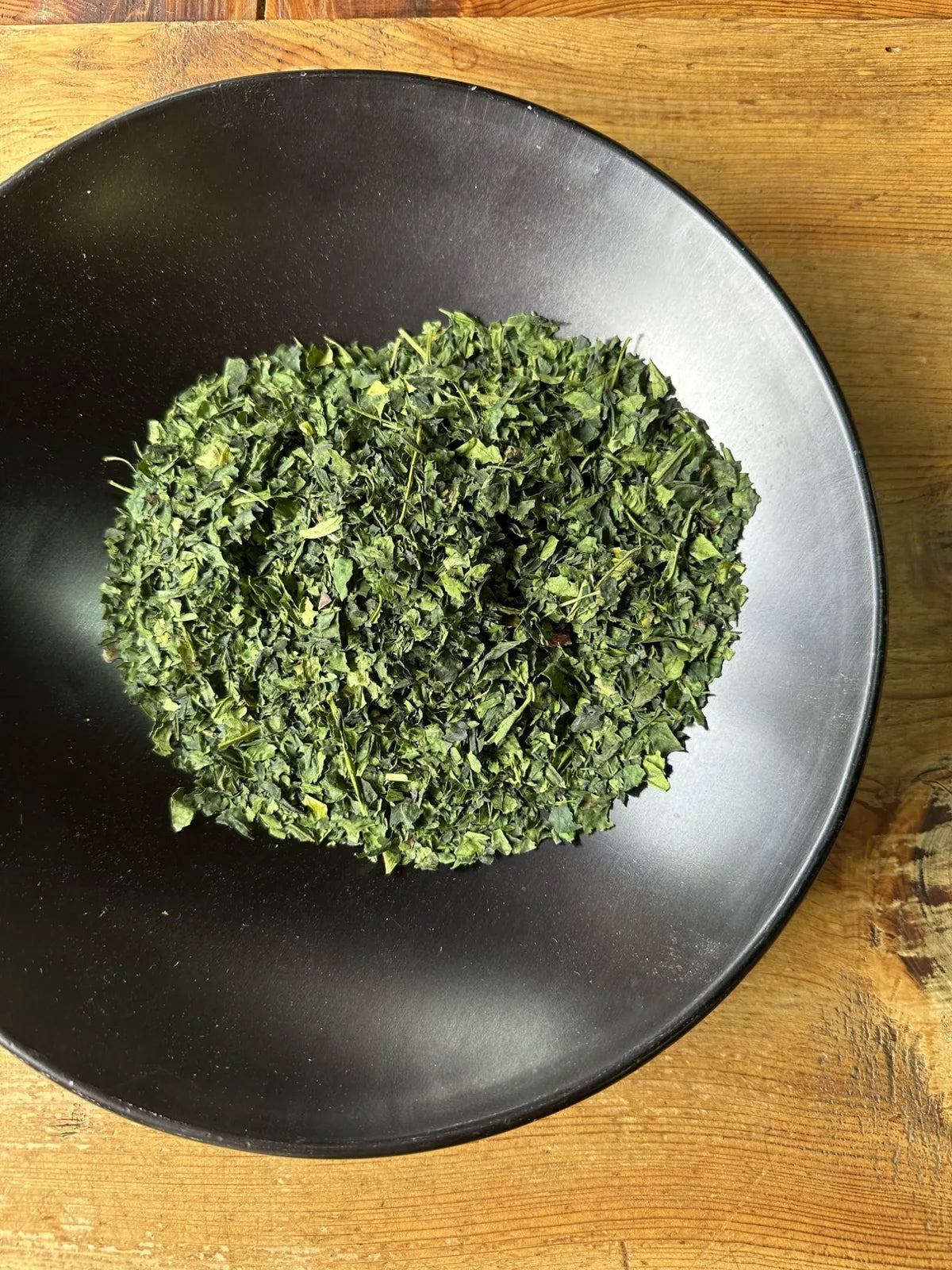
The stems and veins are taken out. What is left is tencha, the leaf that becomes matcha.
From leaf to powder
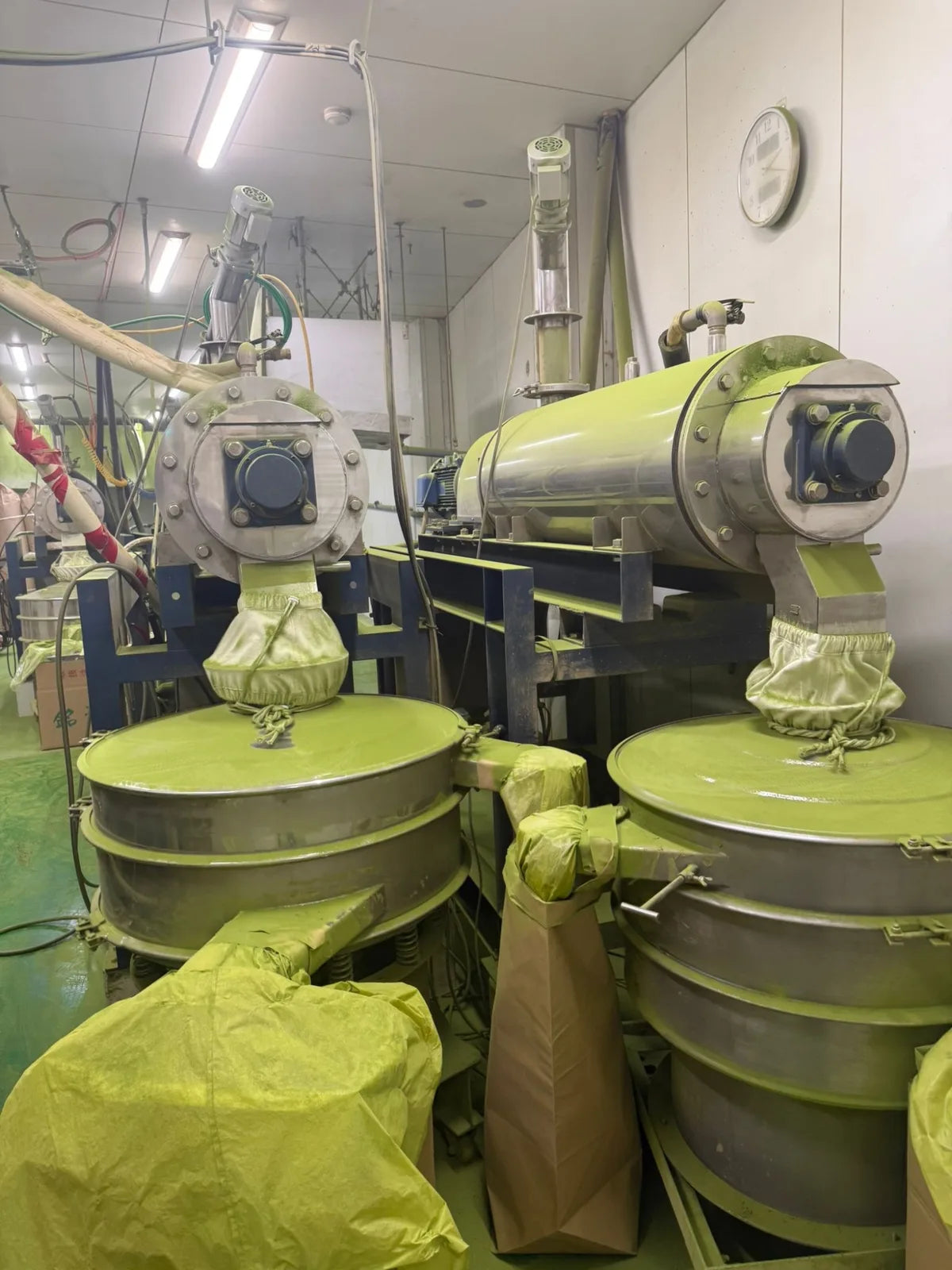
Ground into powder
The tencha is ground into a fine, bright green powder. Our Ceremonial Matcha is ground slowly on stone, a little at a time.

From leaf to powder
Weighed and packed
Then the matcha is weighed and packed, so it stays fresh and green until you open it.
What to look for
How to tell good matcha
Bright green
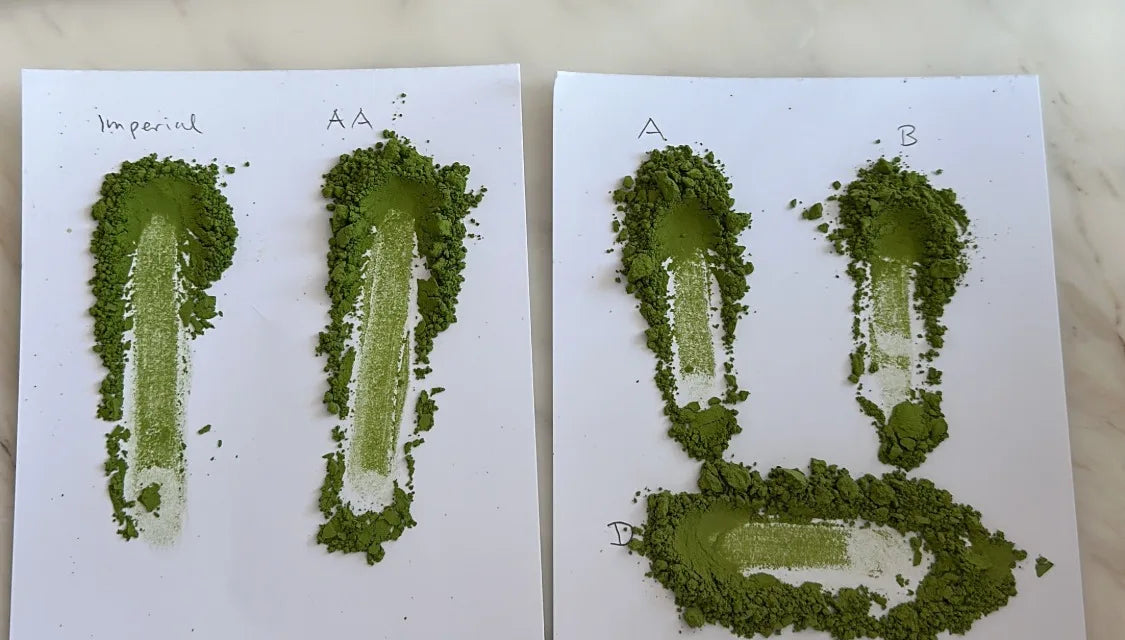
Good matcha is bright green. Side by side on paper, you can see how much the color changes from one matcha to the next.
Fresh and grassy
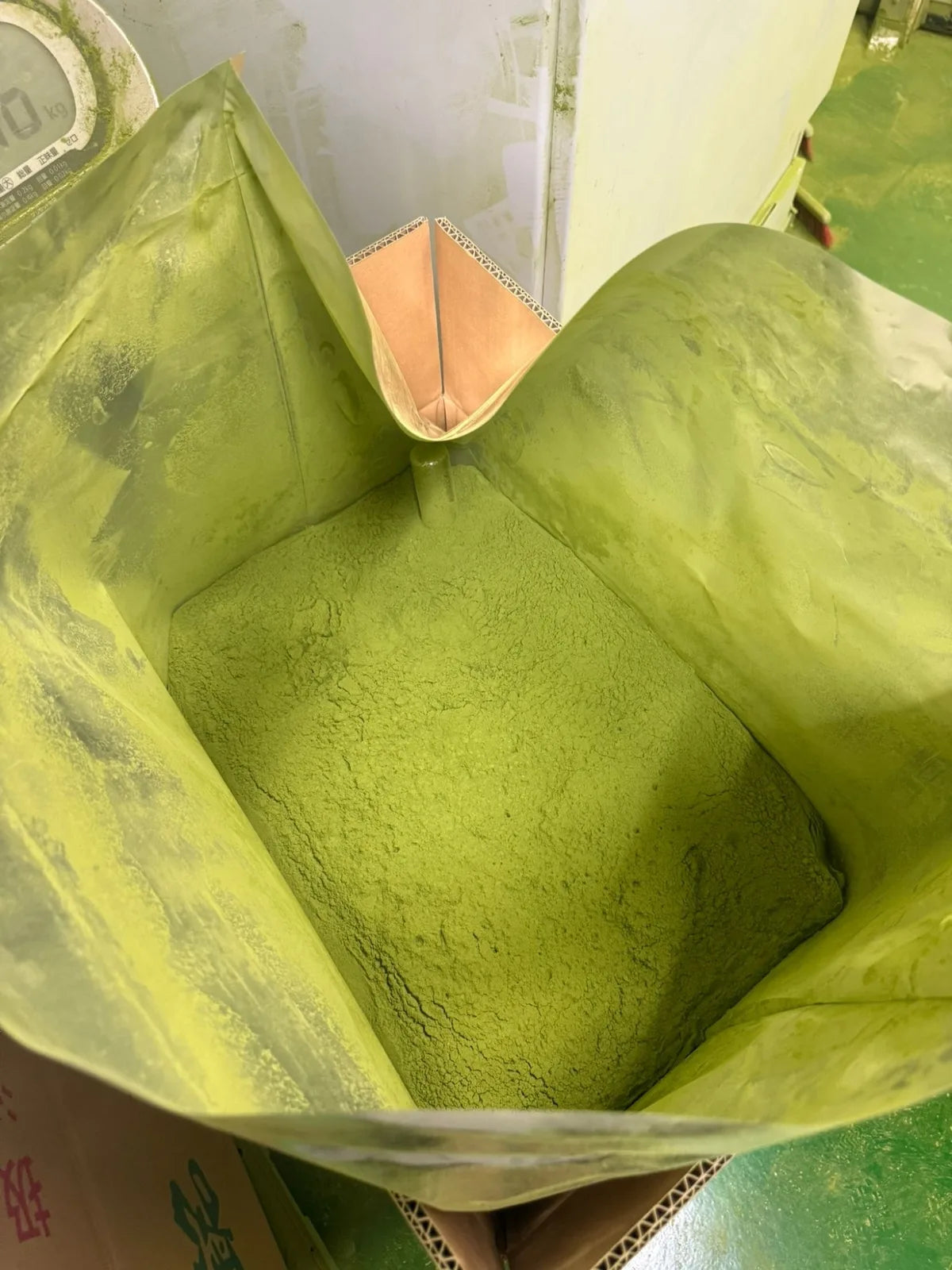
It smells fresh and grassy. If it smells like seaweed, it is not what the name promises.
Smooth and sweet
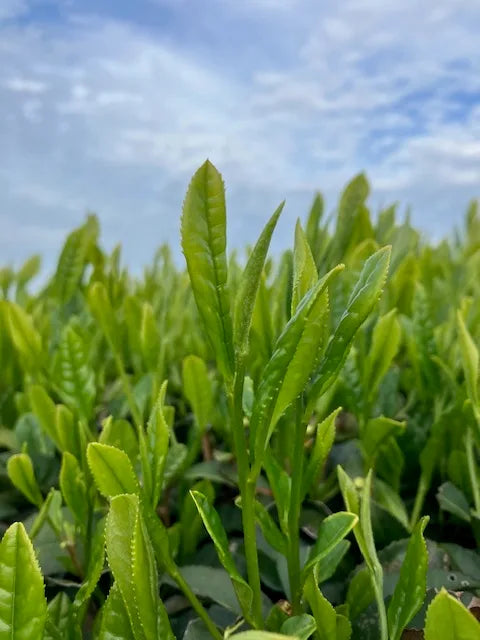
It tastes smooth and sweet, not bitter. That sweetness comes from young leaves grown in the shade.
Quality control
Checked at every step
From the leaf to the sealed pouch, this is how our matcha is looked after.
Matcha is a food you drink whole, so how it is handled matters.
- A hairnet, a mask and work clothes for everyone who handles the matcha
- Gloves at the filling machine
- Packed by hand, indoors, in clean rooms
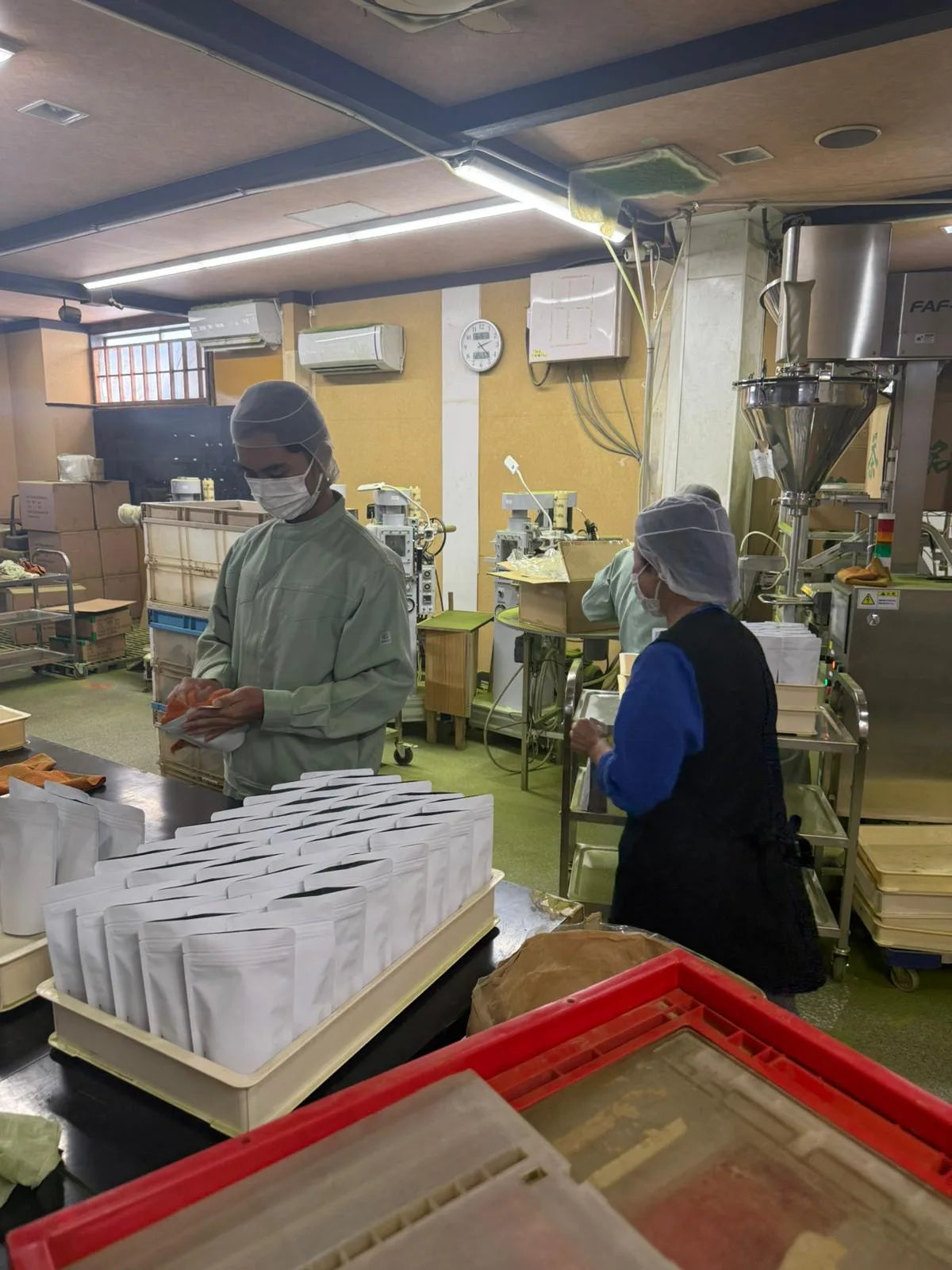
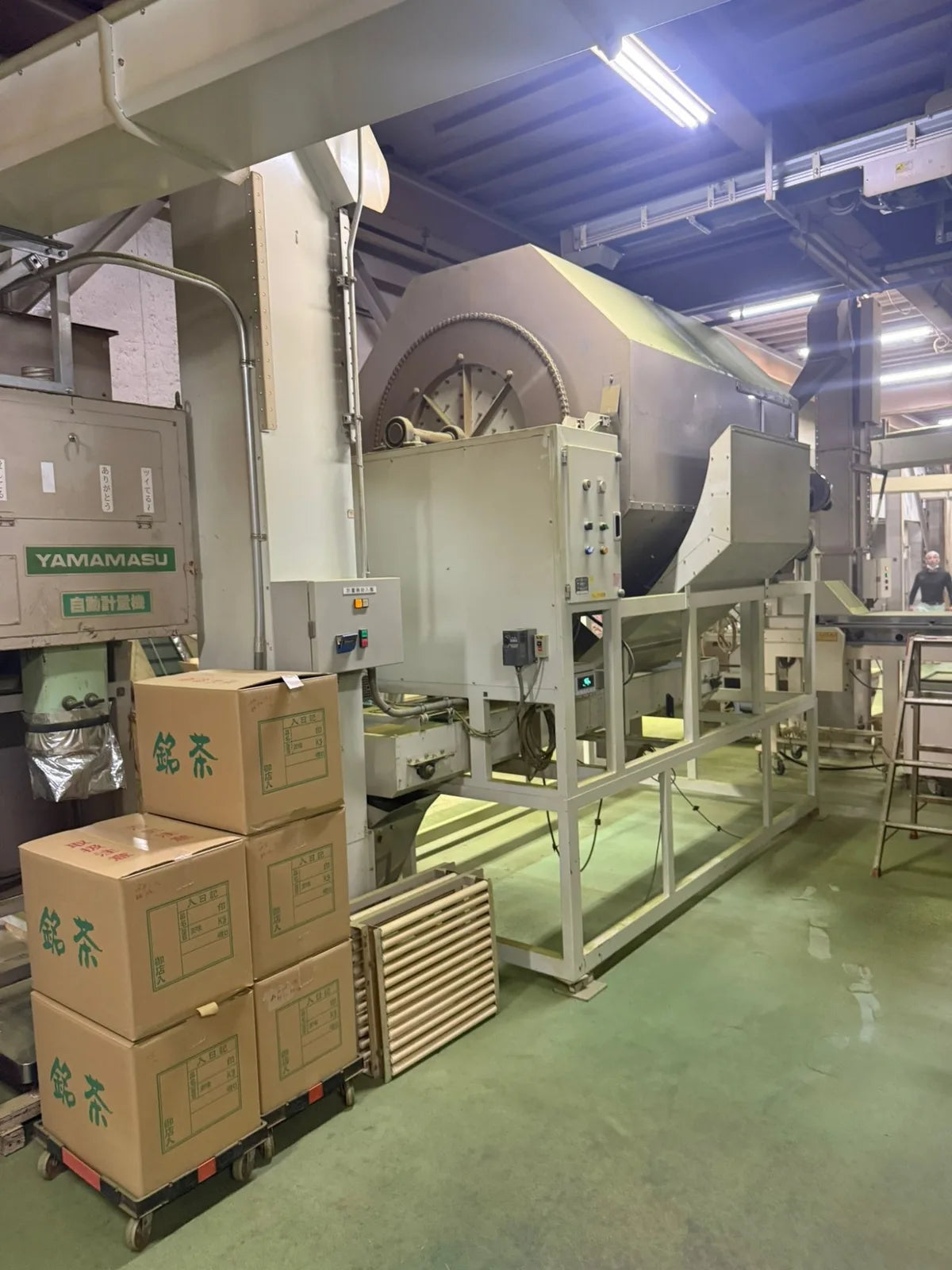
The dried leaves for our Ceremonial Matcha wait in the cold, not as powder.
- Dried leaves (tencha) stored at low temperatures
- Ground a little at a time, not all at once
- So the powder is fresh and bright green when it is packed
The leaf becomes a fine powder, slowly.
- Our Ceremonial Matcha is ground on stone in small batches
- The powder is sifted after grinding
- Fine and even, without lumps
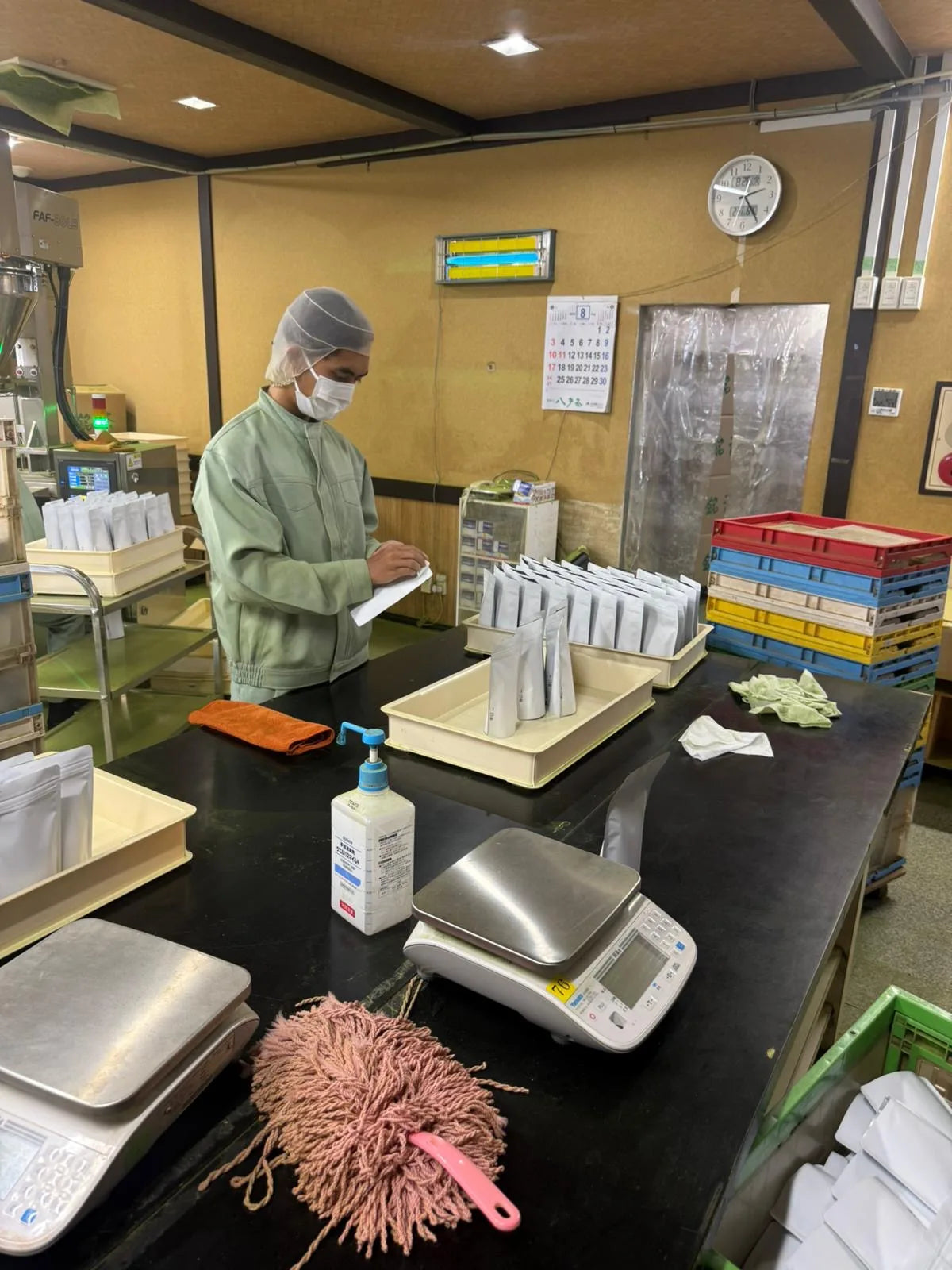
Air, light and moisture dull matcha, so it is closed up quickly.
- Pouches weighed on a scale
- Sealed against air and moisture
- Fresh and green until you open it
Before a matcha is ours, it is tasted against others.
- Laid out side by side on paper
- Compared by color, smell and taste
- We only choose matcha that we like and would drink ourselves
