

Matcha and health
Matcha and health: what's in your cup
Matcha is green tea, made from the whole leaf. Here is what is in a cup: how much caffeine, how much is fine in a day, and what gives matcha its taste.
In the EU, a food may only make health claims that have been checked and approved, and none has been approved for green tea. So this page sticks to what is in the cup.
What you are drinking
You drink the whole leaf
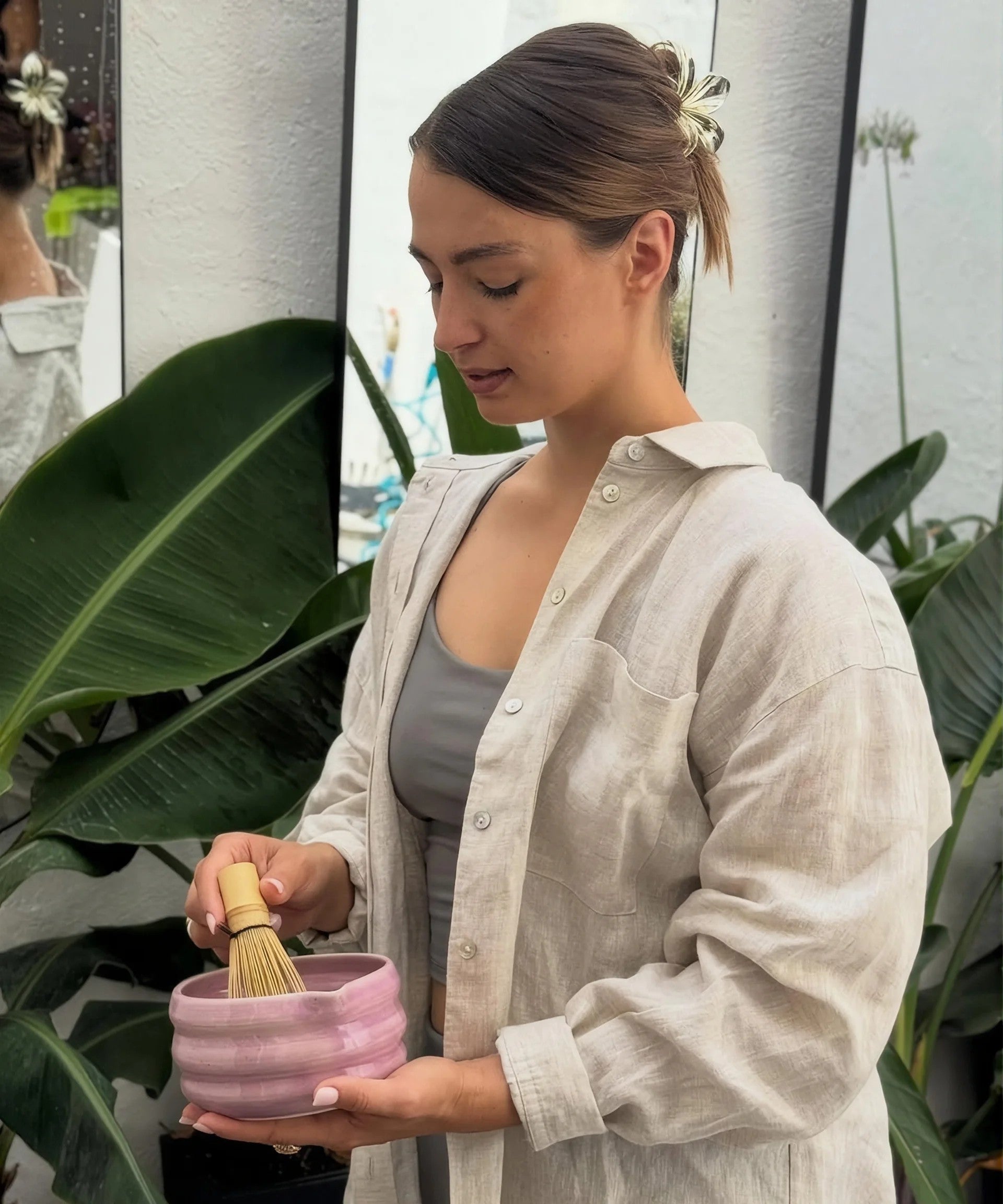
Matcha is made from tea leaves that are shaded for a few weeks before picking, then steamed, dried and ground on stone into a fine powder.
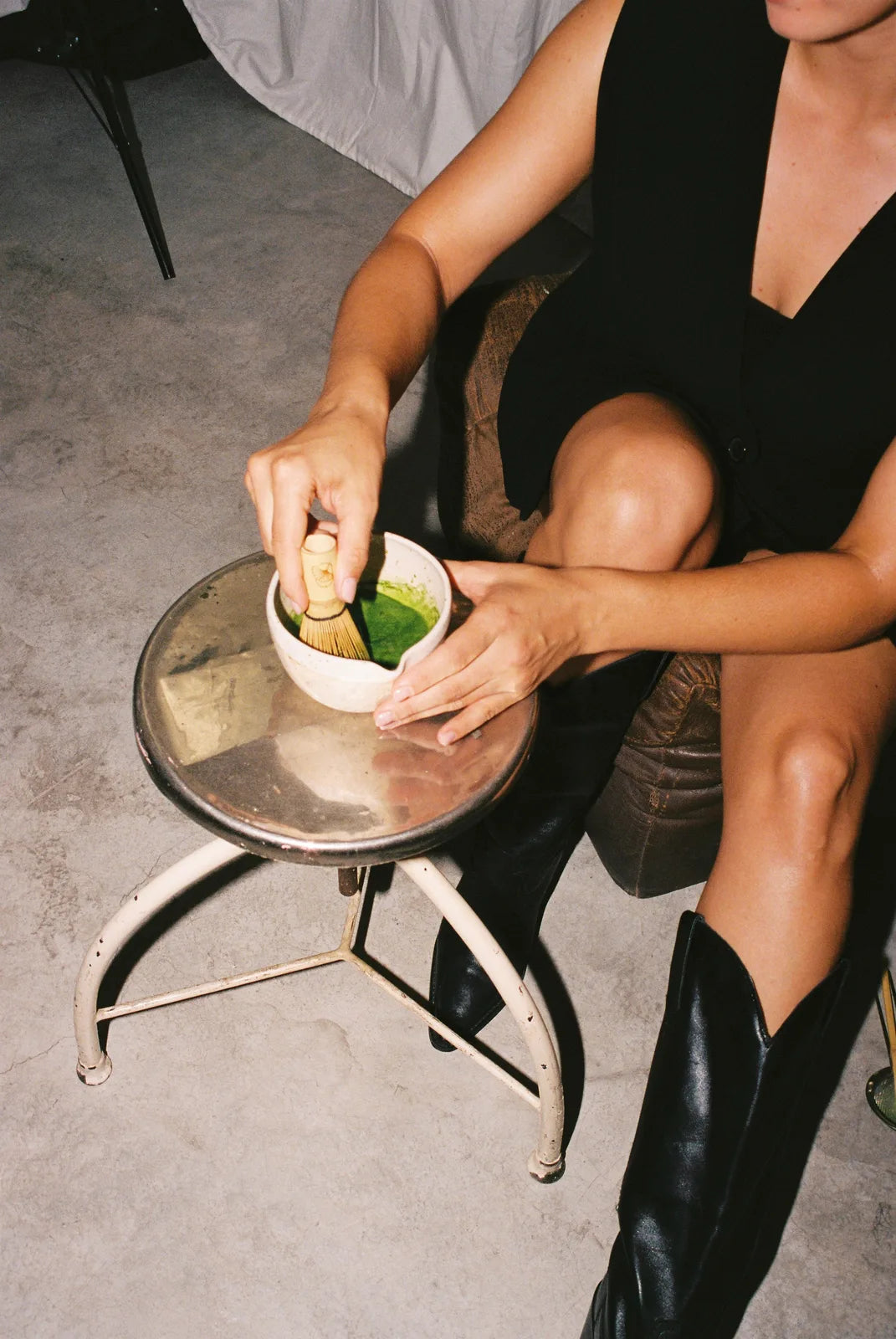
With leaf tea, you steep the leaves and throw them away. With matcha, you whisk the powder into water and drink the whole leaf. That is why a cup of matcha tastes fuller than a cup of green tea, and why it has more caffeine.
Caffeine
How much caffeine is in a cup
Published measurements put matcha at about 19–44 mg of caffeine per gram, depending on the matcha. A 2 g cup has somewhere between 40 and 90 mg, and around 60–70 mg is typical.
60–70 mg
A cup of matcha, 2 g
About 90 mg
A cup of filter coffee, 200 ml
About 80 mg
An espresso, 60 ml
About 50 mg
A cup of tea, 220 ml
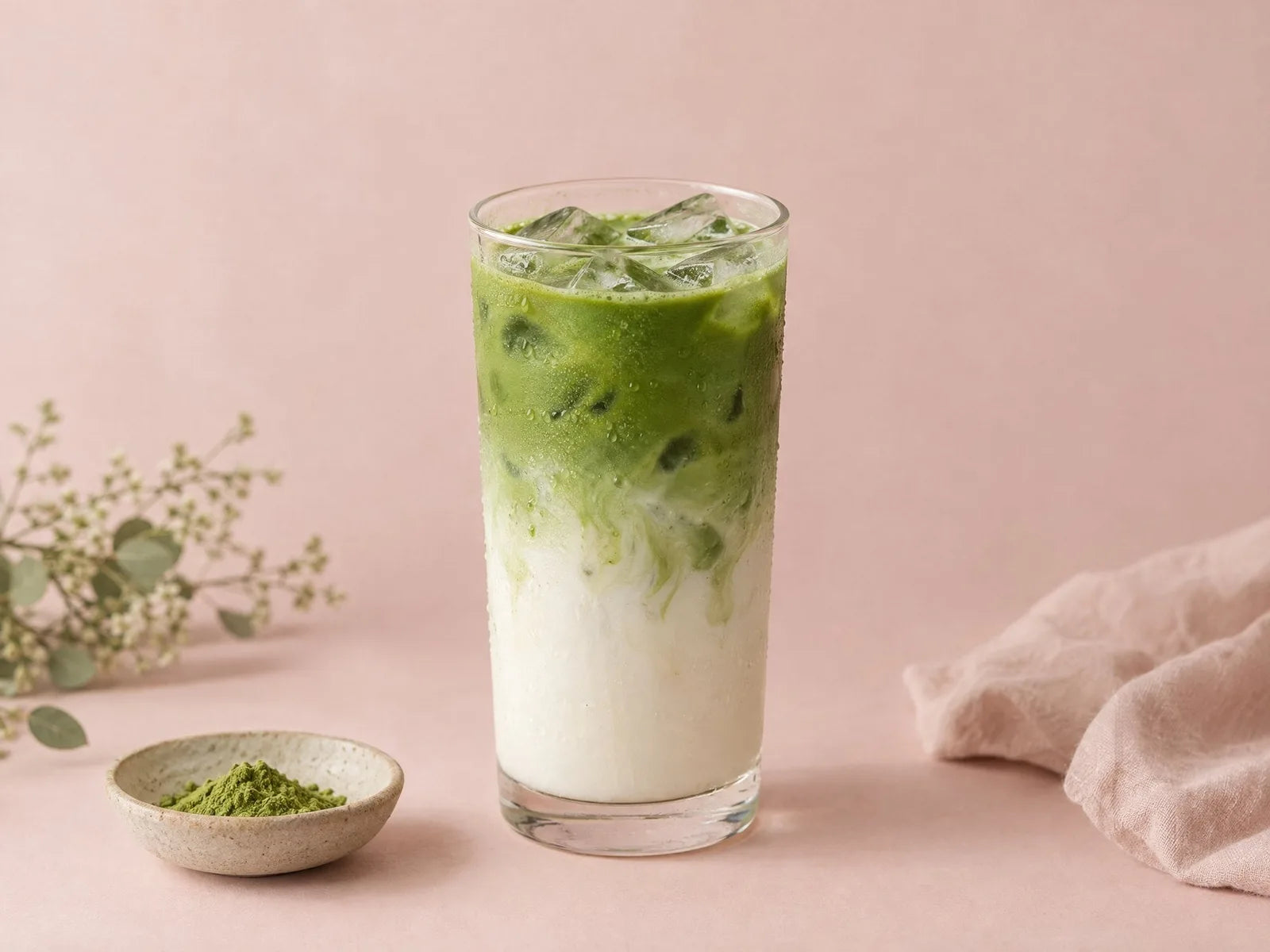
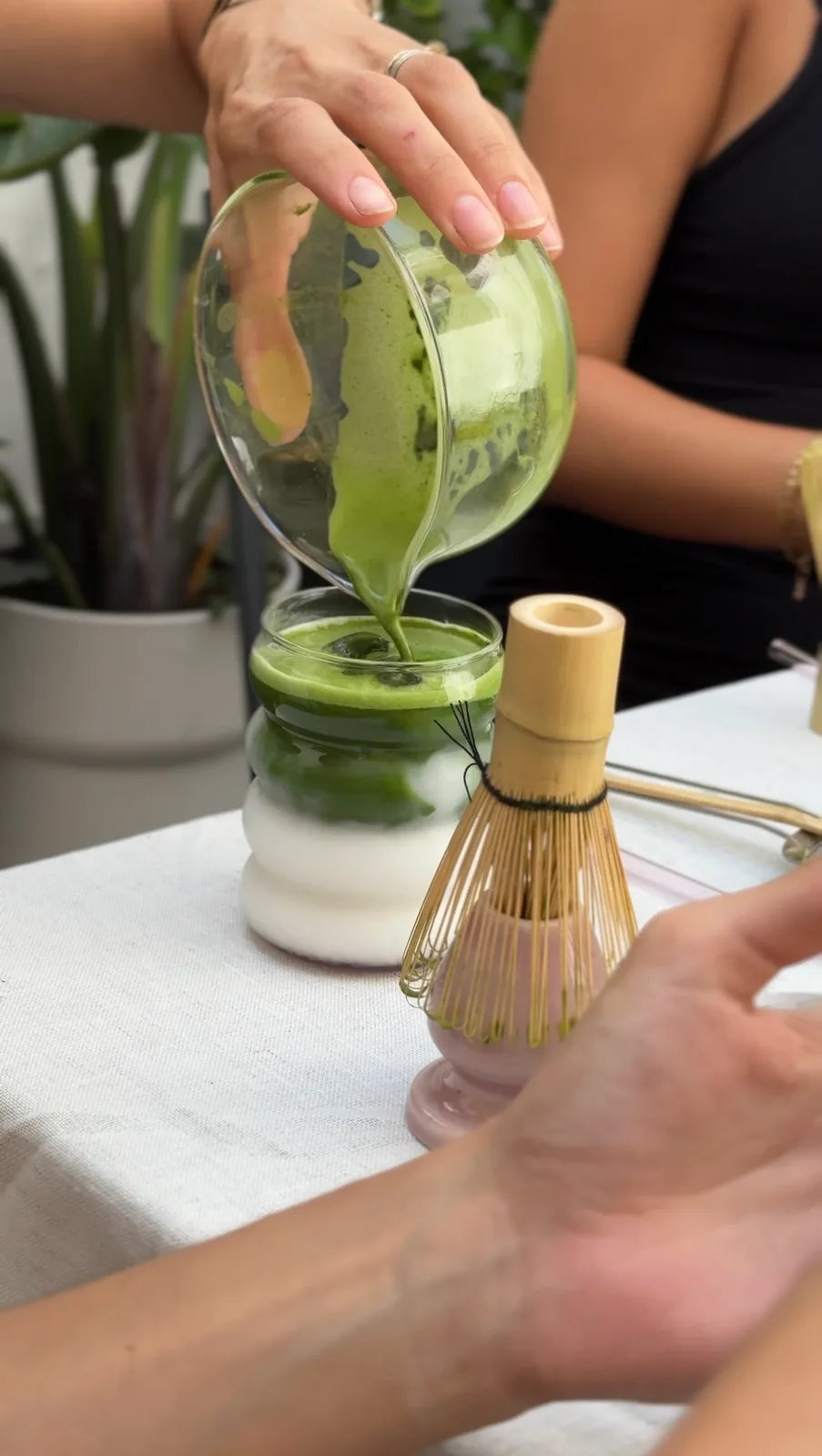
A matcha latte has the caffeine of the matcha in it; milk adds none. A strong 3–4 g serving has about 90–140 mg. There is no caffeine-free matcha: the caffeine is part of the leaf.
Coffee and tea figures: EFSA, the European Food Safety Authority.
Per day
How much caffeine is fine in a day
EFSA considers up to 400 mg of caffeine a day, and up to 200 mg at a time, safe for healthy adults. That counts all your coffee, tea and matcha together.
If you are pregnant or breastfeeding, EFSA's advice is up to 200 mg a day from all sources. Ask your doctor or midwife.
For less caffeine, use a little less matcha: 1–1.5 g still makes a good latte.
Take care
When to go easy on caffeine
Pregnant or breastfeeding
EFSA's advice is up to 200 mg of caffeine a day from all sources. Ask your doctor or midwife what is right for you.
Children and teenagers
EFSA suggests up to 3 mg of caffeine per kg of body weight a day: about 90 mg for a child of 30 kg. A 2 g cup is most of that.
Late in the day
About 100 mg of caffeine close to bedtime can make it take longer for some people to fall asleep. If that is you, have your matcha earlier.
Medication
If you take medication or have a health condition, ask your doctor about caffeine.
Taste
What gives matcha its taste
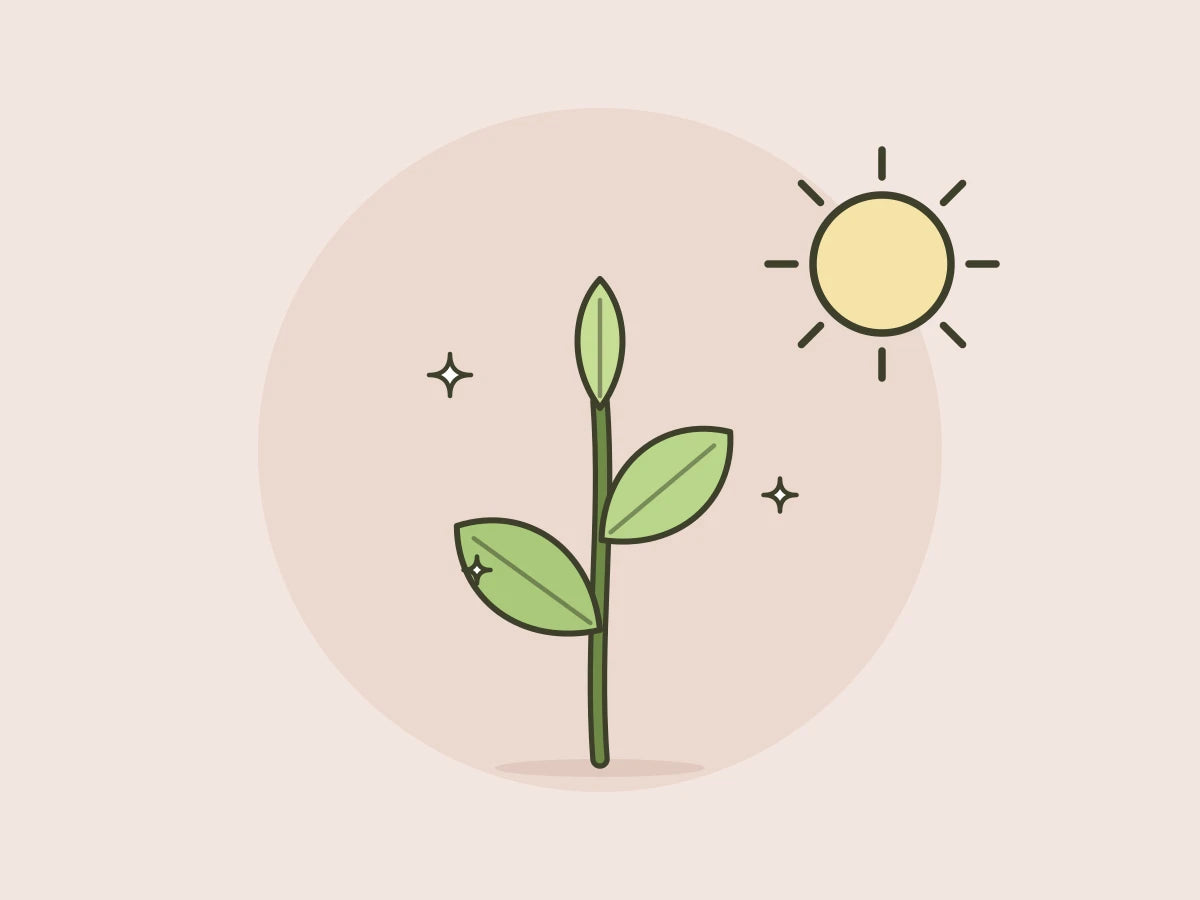
Theanine
An amino acid in the tea leaf that gives matcha its sweetness and umami. Shading the plants keeps more of it in the leaf.
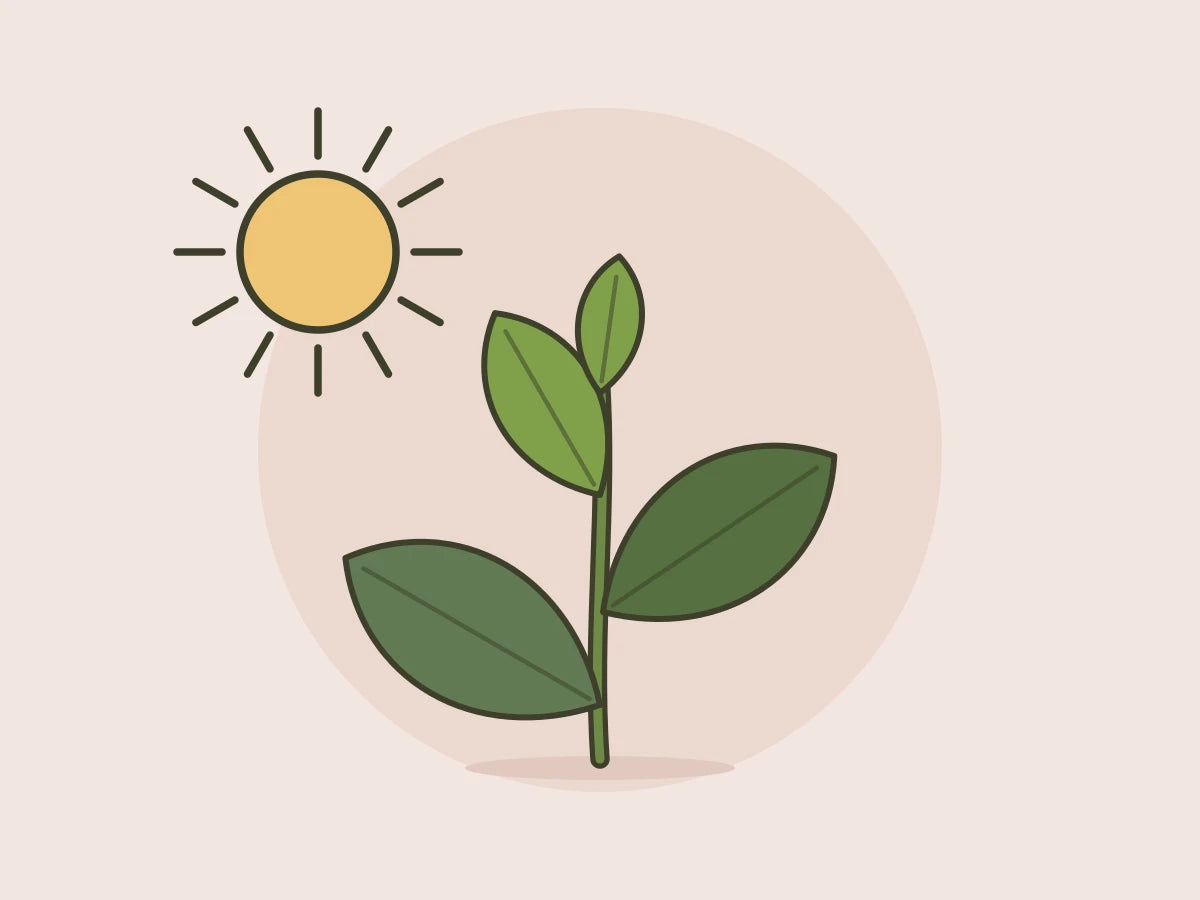
Catechins
Give tea its bitterness and a drying feel. Leaves grown in strong summer sun have more of them.
In the tin
One ingredient, kept fresh
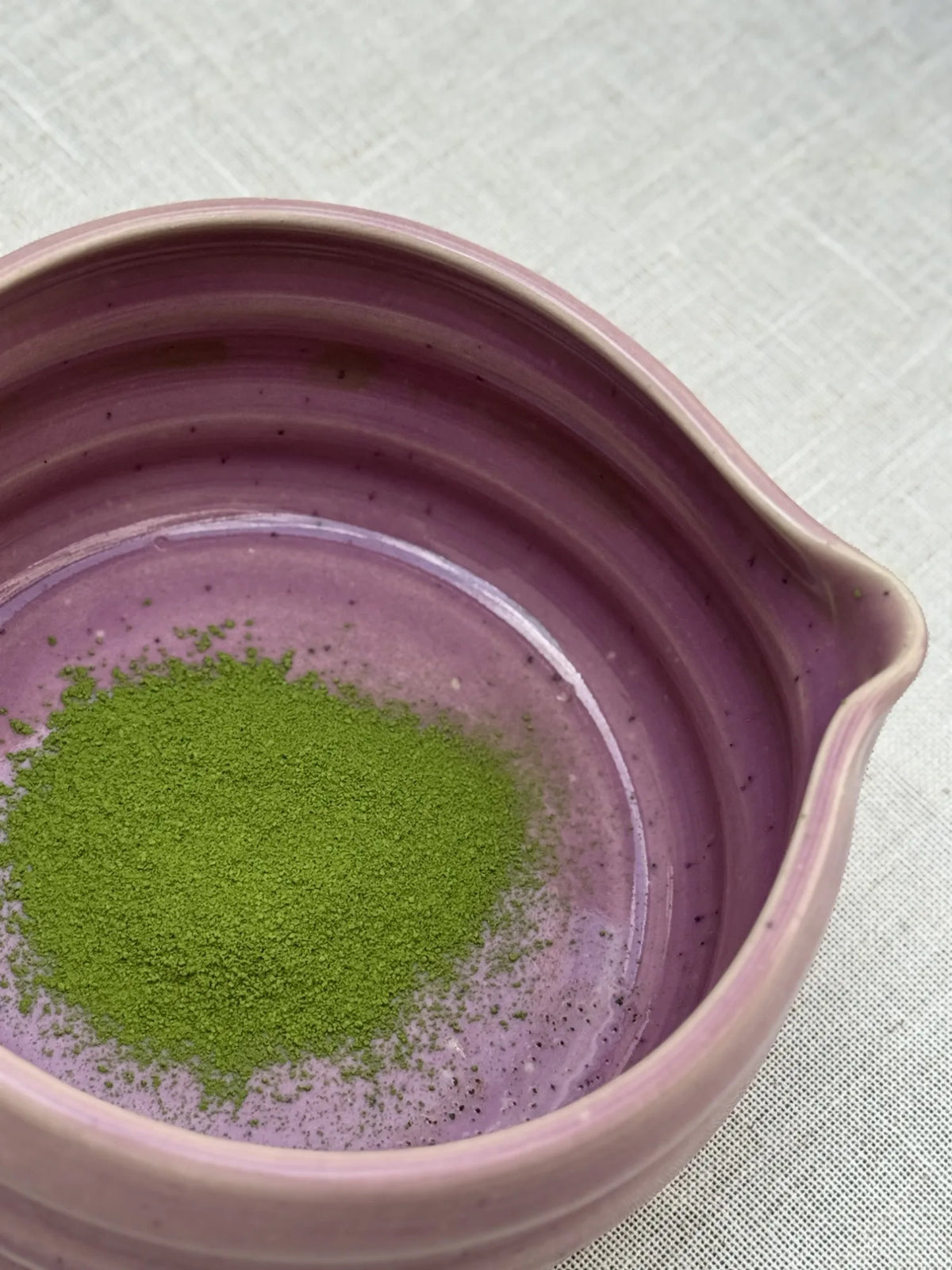
Our matcha is one ingredient: green tea leaves, ground to powder. Nothing is added, no sugar, no flavoring, and it is vegan.
Keep it airtight, cool and dark, away from strong smells. Once opened, enjoy it within 30–60 days. Fresh matcha is bright green; as it ages it turns olive and tastes more bitter.
Questions

How much caffeine is in a cup of matcha?
A cup made with 2 g of matcha has roughly 60–70 mg of caffeine, depending on the matcha. A cup of coffee has around 90–100 mg, and a cup of tea around 50 mg.
How much matcha can I drink in a day?
EFSA considers up to 400 mg of caffeine a day safe for healthy adults, counting all your coffee, tea and matcha. On its own, that is around five or six 2 g cups. Keep a single serving under 200 mg.
Can I drink matcha when pregnant?
EFSA's advice in pregnancy and while breastfeeding is up to 200 mg of caffeine a day from all sources. A 2 g cup has roughly 60–70 mg. Ask your doctor or midwife what is right for you.
Is there caffeine-free matcha?
No. The caffeine is part of the leaf, so every matcha has it. For less, use a little less matcha.
Does a matcha latte have less caffeine?
No. A latte has the caffeine of the matcha in it; milk adds none.
Does matcha have more caffeine than green tea?
Yes. With matcha you drink the whole leaf, ground to powder, instead of water the leaves were steeped in.
What is in a tin of matcha?
One ingredient: green tea leaves, ground to powder. Nothing is added, and it is vegan.
Can I drink matcha if I take medication?
Ask your doctor about caffeine if you take medication or have a health condition.
Can I drink matcha in the evening?
You can, but it has caffeine. About 100 mg close to bedtime can make it take longer for some people to fall asleep. If that is you, have your matcha earlier in the day.
Can children drink matcha?
EFSA suggests up to 3 mg of caffeine per kg of body weight a day for children and teenagers: about 90 mg for a child of 30 kg. A 2 g cup of matcha has roughly 60–70 mg, so keep it small and occasional.
Why don't you list health benefits?
In the EU, a food may only make health claims that have been checked and approved. EFSA has looked at the claims made about green tea, and none has been approved. So we tell you what is in the cup, and let you enjoy matcha for what it is.
Sources
Where these figures come from
- Caffeine limits for adults, pregnancy and children, and the coffee and tea figures: EFSA, Scientific Opinion on the safety of caffeine (2015)
- Caffeine in matcha, 19–44 mg per gram: Kochman et al., Molecules 26(1):85 (2021)
- Health claims on food in the EU: Regulation (EC) No 1924/2006